Sunday, April 6
Google Now, now on your desktop !

Users can experience the same on their Desktops and Laptops running Windows/OSX as well through Google Chrome.Google Now on Chrome shows a subset of the Now cards on our mobile device, and uses device's location.
Wednesday, March 26
Connecting your Blogger blog to Google Analytics
- Log in to your Blogger account.
- Navigate to your blog's Settings > Other tab.
- If you already have a Google Analytics account, simply enter your blog's Google Analytics tracking ID.
- Click Save to finish.
Saturday, June 16
Samsung Galaxy Y Pocket S5300 : Close Kin of Galaxy Y

Wednesday, June 13
Condition Zero :: Video Game Accounts Hacked , What You need to do for Your Protection?

Game accounts have been the targets of hackers for years, but as more games go online or require account verification the stakes are only rising. Having your account hacked could mean hours of lost work and hours more spent on the phone with the game’s tech support.
Wednesday, May 16
Pirate Pay develops BitTorrent traffic blocker to stop piracy
The movie and music industries continue to complain about how much piracy is costing them. DRM doesn’t work as it is easily circumvented, and it seems big lawsuits don’t work either. The proof being The Pirate Bay still being online today.

Another solution has presented itself, however, and it comes in the form of a piece of technology from the Russian company Pirate Pay.
When Pirate Pay was developing traffic management solutions for ISPs a few years ago they came up with a system that managed to block BitTorrent traffic. It worked so effectively the company decided to focus on that bit of tech and developed it as an anti-piracy measure. So good was the solution, Microsoft’s Seed Financing Fund has invested $100,000, and both Walt Disney and Sony Pictures have used it to limit illegal downloads.
Pirate Pay is keeping the details of how their technology works a secret for good reason. All we know is that it floods BitTorrent clients with fake data meaning they disconnect before a download is complete. So even though illegal copies are freely available online, it’s very difficult to successfully download them.
It’s easy to see why such a system would be of great interest to the entertainment industry. With BitTorrent traffic blocked for specific files, it stops movies and music from being downloaded. The cost of doing this is thought to be between $12,000 and $50,000 depending on the scale of the blocking required.
As an example of a successful block, Pirate Pay point to the movie Vysotsky. Thanks to God, I am alive, which was released in Russian movie theaters last December. The company protected the movie for 30 days, during which 44,845 torrent downloads were blocked.
The question now is, can Pirate Pay scale up to protect every movie that is released and effectively end BitTorrent piracy? We also don’t know how effective the system actually is. For example, they may have blocked the movie mentioned above 44,845 times, but how many successful downloads were there?
Thursday, August 11
Nag A Ram? Google Jokes With Search Results “Anagram”

Oh Google, you did it again. The number one trending topic on Google right now is a search for “nag a ram.” What could that strange term mean? Is it some strange 4chan stunt or just a weird glitch? Turns out its neither – it appears to be a fun little “Easter egg” surprise planted by some programmers at Google.
The Internet is good for a lot of things, but its become sort of a default resource for defining terms and concepts in everyday life (sorry Encyclopedia salesmen.) So imagine the fun surprise for thousands of users looking for a quick definition of “anagram.” When one enters that specific term, Google search suggestions asks “id you mean: nag a ram?” Get it? “nag a ram” is an anagram, of anagram!
For the record, the accepted definition of anagram is “a word, phrase, or name formed by rearranging the letters of another, such as cinema, formed from iceman.”
So for all the curious sorts out there looking to hop on the SEO hot topic trend game, Nag a ram is nothing but a fun anagram of anagram. (Silly Google.)
Saturday, July 23
Android handset prices may go up
Now that Microsoft and Oracle are going after Android based smartphone makers, asking them to pay $15 to $20 per handset, the cost of the Android smartphones may go up by Rs 1,000.

Now that Microsoft and Oracle are going after Android based smartphone makers, asking them to pay $15 to $20 per handset, the cost of the Android smartphones may go up by Rs 1,000.
Google has been accused of breaching several patents in the process of creating its Android operating system. Now those handset makers who manufactured their handsets based on the Android operating system, run the risk of paying a huge amount to other companies for their patents.
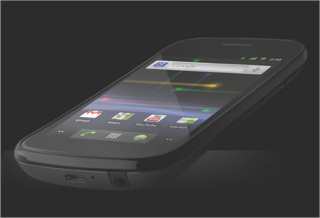
Nexus 3 to feature dedicated Google+ button
However, there is now confusion over who will manufacture the upcoming Nexus 3 smartphone. Earlier, Samsung claimed it would manufacture the handset but reports are now saying HTC will be the manufacturer.
Friday, June 17
All U Need To Know :: CAPTHA :: tHE weird characters that u have to type in before Login Everywhere
CAPTCHA is a type of challenge-response test used in computing as an attempt to ensure that the response is generated by a person. The process usually involves one computer (a server) asking a user to complete a simple test which the computer is able to generate and grade. Because other computers are supposedly unable to solve the CAPTCHA, any user entering a correct solution is presumed to be human. Thus, it is sometimes described as a reverse Turing test, because it is administered by a machine and targeted to a human, in contrast to the standard Turing test that is typically administered by a human and targeted to a machine. A common type of CAPTCHA requires the user to type letters or digits from a distorted image that appears on the screen.

Early CAPTCHAs such as these, generated by the EZ-Gimpy program, were used on Yahoo!. However, technology was developed to read this type of CAPTCHA